
Causes and Treatment Methods of Root Rot in Plants
The Definitive Guide to the Causes and Treatment Methods of Root Rot in Plants
Root rot is, unfortunately, one of the most common and distressing issues faced by houseplant enthusiasts across London and the UK. As a premier flowershop dedicated to both artistic blooms and stunning, long-lasting foliage, Bloom & Art believes in empowering our clients with the expert knowledge needed to save their living investments.
When a plant begins to decline, the silent culprit is often rot, a destructive condition that can rapidly kill even the hardiest specimen. Understanding the causes and treatment methods of root rot in plants is essential for any plant owner. This definitive guide, drawn from our horticultural expertise, will walk you through diagnosing the issue, implementing emergency treatment, and establishing foolproof preventative measures.
1.Diagnosis: Identifying Early Signs of Root Rot in Plants
Root rot is often silent until it has reached a critical stage. However, by understanding the subtle symptoms, you can intervene early and drastically improve your plant’s chances of survival.
1.1. Above-Ground Symptoms: The Visual Clues
The initial signs of root rot in plants often mimic symptoms of dehydration or nutrient deficiency, which can be confusing for plant owners.
- Drooping and Wilting: The plant appears perpetually thirsty, with leaves drooping even after watering. This is because the damaged roots can no longer absorb moisture, regardless of how much water is in the soil.
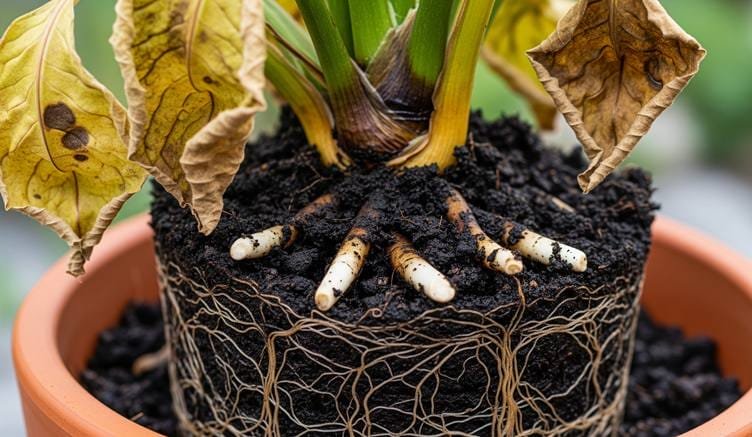
- Yellowing Leaves (Chlorosis): Leaves, particularly older ones, may turn yellow or brown. Unlike normal leaf death, these leaves may feel mushy or soft, indicating cellular breakdown due to lack of nutrients.
- Stunted or Slowed Growth: The plant ceases to put out new leaves, or the new growth is unusually small, weak, or deformed. The plant is devoting all its limited energy to surviving the root stress.
- Foul Odour: Perhaps the most definitive clue is a distinctive, pungent, decaying odour coming from the soil. This smell is produced by the anaerobic bacteria and fungi thriving in the waterlogged environment.
1.2. Below-Ground Symptoms: Inspecting the Root System
A proper diagnosis requires inspection of the roots themselves. Carefully slide the plant out of its pot to examine the root ball.
- Healthy Roots: Should be firm, plump, and typically white or light tan/yellow. They may reach the edge of the pot, forming a tight ball.
- Rotted Roots: Will appear dark brown or black, feel soft, and look mushy or slimy. If you attempt to gently pull on them, they will slough off the central core easily. This clearly confirms the presence of root rot in plants.
2.Understanding the Primary Causes and Treatment Methods of Root Rot in Plants
While the resulting damage is caused by fungal pathogens, the fundamental root of the problem (pun intended) is environmental. Root rot is an opportunistic disease.
2.1. The Number One Culprit: Improper Watering
The primary reason for plant root rot causes is overwatering, which starves the roots of oxygen—a condition called asphyxiation.
- Oxygen Deprivation: Plant roots, like leaves, need to breathe. They take up oxygen from the tiny air pockets within the soil. When the soil remains saturated with water for too long, these air pockets are filled with water, cutting off the oxygen supply.
- Vulnerability: Deprived of oxygen, the roots’ cells begin to die. These compromised, dying cells become the perfect breeding ground for opportunistic, waterborne fungal spores already present in the soil.
2.2. Poor Drainage and Soil Compaction
The quality of the potting medium and container are significant contributing factors to root rot.
- Compacted Soil: Over time, cheap, peat-heavy potting mixes break down and compact, losing the necessary structure to maintain air pockets. Even if you water correctly, the soil holds too much moisture.
- Drainage Holes: A pot without sufficient drainage holes—or a decorative cachepot (outer pot) that catches excess water—will leave the root ball sitting in stagnant, anoxic water, leading directly to root rot in plants.
2.3. The Role of Fungi: The Pathogens
Once the roots are weakened by lack of oxygen, fungal pathogens take over. These microscopic fungi, such as Pythium, Phytophthora, and Fusarium, rapidly colonize the dying root tissue, turning the roots into the slimy, black mass characteristic of root rot in plants. The infection then spreads aggressively throughout the root system.
2.4. Environmental Factors
Even with proper watering, certain conditions can slow the evaporation rate and increase the risk of rot:
- Low Light: Inadequate light means the plant cannot photosynthesize efficiently, slowing its metabolism and reducing its water consumption. The soil then remains wet for longer.
- Low Temperature: During winter or in draughty areas, low temperatures further slow the plant’s metabolism, increasing the time the soil stays saturated.
3.Step-by-Step Emergency Root Rot Treatment
Saving a plant afflicted by root rot is an emergency procedure that requires immediate, precise action. Do not delay.
3.1. Immediate Isolation and Inspection
First, remove the plant from its container. Take the entire root ball to a sink or outdoor area and gently shake off as much of the old, contaminated soil as possible. Use a gentle stream of running, lukewarm water to wash away the remaining soil and clearly expose the root system.
3.2. Pruning the Infected Roots
This is the most critical stage of the root rot treatment. You must be ruthless in removing the diseased tissue.
- Sterilize Your Tools: Use sharp, clean scissors or secateurs that have been sterilized with rubbing alcohol (isopropyl alcohol) or a 10% bleach solution. This prevents the spread of fungal spores to the healthy tissue and other plants.
- Prune the Decay: Carefully cut away every root that is brown, black, or soft/mushy. Continue cutting until you only see firm, white, or light-coloured, healthy root tissue. It may look drastic, but removing the infected portions is the only way to save the plant.
3.3. Fungal Root Rot Treatment: Disinfection
After pruning, the remaining healthy roots must be disinfected to kill any lingering fungal spores.
- Hydrogen Peroxide Solution: Soak the pruned root ball in a solution of one part 3% hydrogen peroxide to two parts water for a few minutes. The bubbling action of the peroxide releases oxygen and can help kill anaerobic bacteria and fungal spores.
- Commercial Fungicide: For severe fungal root rot, a systemic or contact fungicide labeled for horticultural use may be necessary. Follow the product instructions precisely for best results.
3.4. The Repotting Process
Do not reuse the old soil or the uncleaned pot, as both are contaminated.
- Clean the Pot: Thoroughly clean and sterilize the old pot with a bleach solution, or better yet, choose a new terracotta pot (which naturally wicks away moisture) that has excellent drainage.
- New, Aerated Soil: Repot the plant into fresh, sterile potting mix specifically blended for your plant’s needs (e.g., a fast-draining orchid mix or a succulent mix amended with perlite/bark for aeration).
- Do Not Water: Do not water the newly repotted plant immediately. Allow the plant’s roots and any cut wounds to air-dry for a day to reduce the immediate risk of re-infection.
3.5. Post-Treatment Care and Monitoring
After implementing the emergency root rot treatment, the plant will be in shock. Place it in a location with bright, indirect light (never direct, harsh sun) and maintain higher-than-average humidity to help prevent further dehydration. Do not water again until the top two inches of the new soil are completely dry.
4.Advanced Prevention: Stopping Plant Root Rot Causes Before They Start
The best approach to root rot is prevention. By adjusting your watering technique and using the correct materials, you can create an environment where root rot in plants simply cannot thrive.
4.1. Mastering the Proper Watering Technique
Adopt the Bloom & Art “Soak and Dry” method:
- Check First: Never water on a schedule. Test the soil moisture with your finger or a moisture meter. Wait until the top 1-2 inches of soil are completely dry before watering again.
- Soak Thoroughly: When you do water, soak the plant until water freely drains out of the bottom drainage holes. This ensures all parts of the root ball are hydrated and flushes out any mineral buildup.
- Empty the Saucer: Crucially, always empty the excess water from the decorative saucer or cachepot within 15–30 minutes.
4.2. Choosing the Right Soil Mix and Pot
Ensure your potting medium provides excellent drainage and aeration.
- Amend the Soil: Amend standard potting soil with generous amounts of inorganic materials like perlite, pumice, or orchid bark. This keeps the soil airy and prevents compaction.
- Proper Drainage: Always plant in a container with a drainage hole. If using a decorative pot, ensure the plant remains in its nursery pot for easy removal and drainage.
4.3. Ensuring Adequate Light and Air Circulation
Provide your plants with the light they require to use water efficiently, and ensure good airflow. Air circulation helps the top layer of soil dry more quickly, reducing the prolonged saturation that is a key factor in plant root rot causes.
By adopting these professional horticultural techniques, you empower yourself to prevent and effectively manage one of the greatest threats to your indoor greenery.
Related Posts


Find Us On Instagram




M. Pereira says: