What Do Flower Colours Mean?
What Do Flower Colours Really Mean? A Complete Gifting Guide
Before a recipient reads the card, they see the colour — and colour is often the first thing that sets the emotional tone of a bouquet. If you’ve ever paused at the flower shop wondering what do flower colours mean and whether you’re sending the right message, this guide breaks it down.
Why Colour Says So Much
What do flower colours mean, and why does it matter so much? Long before anyone writes a card, colour has already done a lot of the talking. The tradition goes back centuries, refined through the Victorian language of flowers, but the basic associations still hold today: warm colours tend to feel romantic or energetic, cool colours feel calming or respectful, and white sits in a category of its own, carrying very different meanings depending on the occasion.
Flower Colour Meanings, One by One
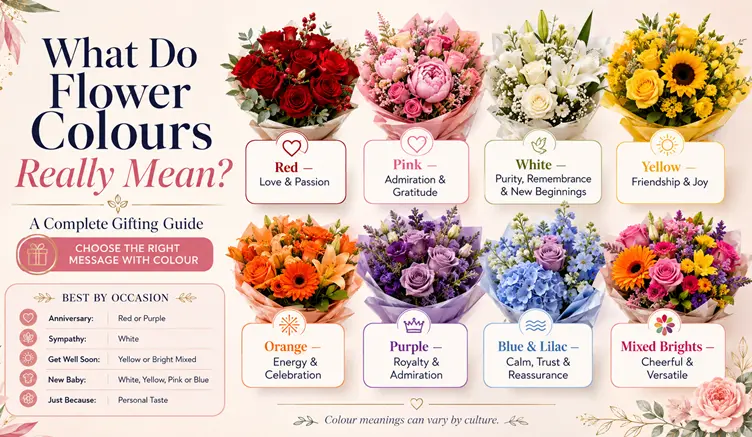
- Red: the classic colour of romantic love and passion. Red roses remain the definitive choice for anniversaries and Valentine’s Day, though red also works for bold congratulations or a dramatic thank-you.
- Pink: softer than red — admiration, gratitude, and gentle affection rather than intense passion. Pink is a natural fit for Mother’s Day, thank-yous, or a birthday for someone close to you.
- White: purity, remembrance, and new beginnings — the most traditional choice for sympathy and funeral flowers, and equally at home in a new baby bouquet or a wedding.
- Yellow: friendship, joy, and warmth, with no romantic undertone at all. This makes yellow one of the safest colours for a colleague, a get well soon gift, or a “thinking of you” gesture.
- Orange: energetic and enthusiastic — a good choice for celebrating an achievement, a new job, or anything that calls for a bold, cheerful statement.
- Purple: historically tied to royalty and admiration, purple flowers suit anniversaries, a respectful thank-you, or simply anyone who appreciates something a little more distinctive.
- Blue and lilac: calm, trust, and reassurance. These softer tones work well for thinking of you gifts or for someone who’s had a stressful week.
- Mixed and bright: a joyful, no-single-message bouquet — a safe and popular choice when you want to celebrate without picking one specific emotion.
Choosing by Occasion
If you already know the occasion but not the colour, this is often the faster way in:
- Anniversaries: red or purple, for romance or admiration. See our anniversary flowers guide for more by milestone year.
- Sympathy: white, with soft green or pale pink as gentler alternatives.
- Get well soon: yellow, orange, or soft mixed brights — cheerful without feeling too celebratory.
- New baby: white and yellow for a gender-neutral choice, or pink and blue for a more traditional gender-specific gift.
- Just because: genuinely open — this is where personal taste matters more than tradition.
A Quick Word on Cultural Context
Colour meanings aren’t universal. White, for example, signifies purity and new beginnings in most Western contexts, but represents mourning in several Asian cultures. If you’re sending flowers to someone from a different cultural background, it’s worth a quick check before assuming a colour will land the way you intend.
Frequently Asked Questions
What do flower colours mean in general?
Broadly: red for romantic love, pink for admiration and gratitude, white for purity or sympathy, yellow for friendship, orange for enthusiasm, and purple for respect or admiration.
What colour flowers are best for an anniversary?
Red is the classic choice for romance, though purple is a distinguished alternative for a milestone anniversary.
What colour flowers should I avoid for sympathy?
Bright, celebratory colours like orange or bold red are best avoided — white, soft pink, or pale green are the more respectful choices.
Is yellow a romantic colour?
No — yellow is traditionally associated with friendship and joy rather than romance, which makes it a safe, warm choice for non-romantic gifts.
Does flower colour meaning vary by culture?
Yes, particularly white, which represents purity in the West but mourning in parts of Asia. It’s worth considering the recipient’s background for anything beyond a casual gift.
Let Colour Do Some of the Talking
So, what do flower colours mean when it really comes down to it? A shortcut for choosing well, rather than a strict rulebook. Whether you’re leaning towards red for romance, yellow for friendship, or a mixed bouquet that sidesteps any single message, the right colour makes the gesture land exactly the way you intended — browse our full range to find yours.