How to Revive Wilting Flowers
How to Revive Wilting Flowers: Quick Fixes That Work
A drooping bouquet can look like a lost cause, but knowing how to revive wilting flowers is easier than most people expect — most cut flowers don’t wilt because they’re finished, they wilt because the stem has stopped drinking. That’s usually fixable, and often faster than you’d expect.
Don’t Give Up on Them Yet
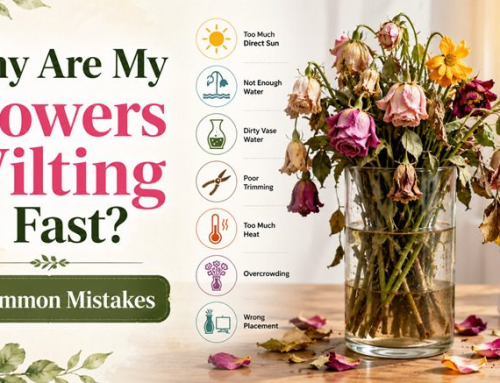
Cut flowers rarely fail from simple old age. Far more often, the stem has sealed over, air has become trapped inside it, or bacteria in the vase water have clogged it — all three block the flower from taking up water, even when the vase looks full. If you’re wondering how to revive wilting flowers, the good news is that all three causes are reversible if you act while the bloom is still soft and pliable, rather than dry and papery. (If you’re not sure which mistake caused it in the first place, our guide on why flowers wilt so fast covers the most common culprits.)
The First Step for Almost Any Wilted Bouquet
If you only remember one thing about how to revive wilting flowers, make it this: before trying anything more specific, this simple routine solves the majority of wilting on its own.
- Take the flowers out of the water and lay them somewhere clean.
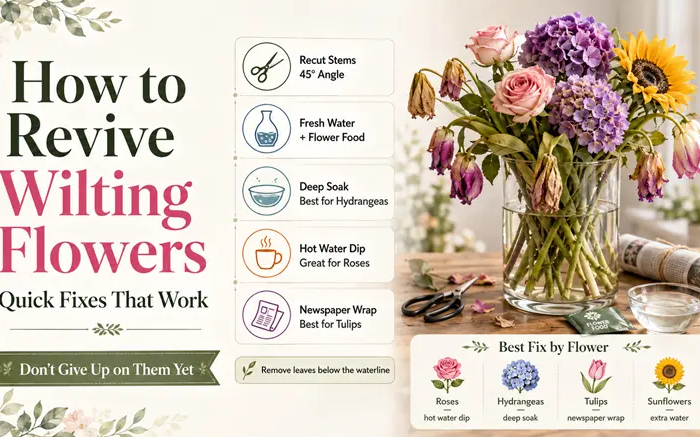
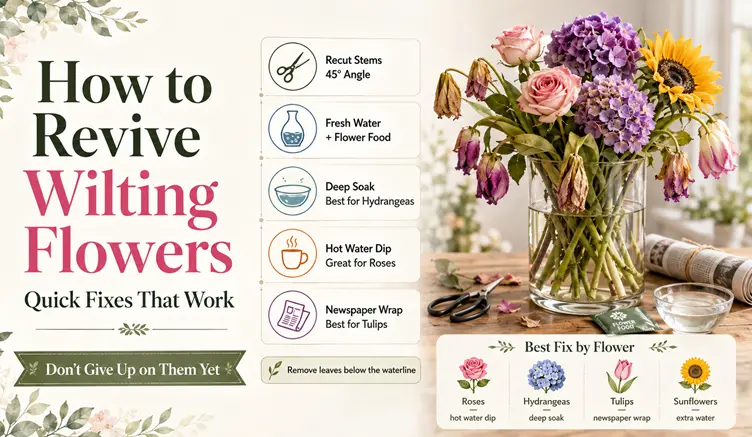
- Recut each stem about an inch from the bottom, at a 45-degree angle, using sharp scissors or a knife.
- Strip away any foliage that would sit below the waterline — submerged leaves rot quickly and feed bacteria.
- Refill the vase with clean water and the flower food provided, then put the flowers straight back in.
For many bouquets, this alone is enough to bring them back within a few hours.
Three Florist Tricks for Stubborn Cases
If the basic routine isn’t enough, these techniques go a step further.
The Deep Soak
Fill a clean sink or basin with cool water and lay the entire flower — stem, leaves, and head — fully submerged for 30 minutes to an hour. This works especially well for roses and hydrangeas, since hydrangeas absorb water through their petals as well as their stems, and a full soak rehydrates both at once.
The Hot Water Dip
Boil a small amount of water and pour it into a heatproof mug or jar. Holding the bloom well away from the steam, dip just the bottom inch of the stem into the hot water for 20–30 seconds, then move it straight into a vase of cool water. The heat clears any blockage inside the stem, which makes this particularly effective for roses with a “bent neck” — where the stem has gone soft just below the flower head.
The Newspaper Wrap (Best for Tulips)
Tulips are unusual because they keep growing after being cut, which is part of why they droop. Wrap the stems snugly in a sheet of newspaper to hold them upright, then stand them in cold water for a few hours. The paper supports the heads while the stems firm back up.
Reviving Specific Flowers
- Roses: the hot water dip is the classic florist fix, especially for a bent neck — but the deep soak works well too if you’d rather not deal with boiling water.
- Hydrangeas: these are the flowers that respond most dramatically to a full submersion soak, since they drink through their petals.
- Tulips: the newspaper wrap plus cold water, since they prefer cooler temperatures than most other flowers.
- Sunflowers and other heavy drinkers: recut the stem and give them noticeably more water than you’d expect — they can empty a small vase in a single day.
When It’s Too Late to Revive Them
Not every wilted flower can be brought back, and it’s worth knowing the difference so you’re not soaking a bouquet that’s genuinely finished. Petals that have turned papery or translucent, a sour smell coming from the vase water, or stems that have gone soft and slimy at the base are all signs that a flower has reached the natural end of its cycle rather than simply needing water. For a fuller breakdown of what to expect from different flowers before you reach that point, see our guide on how long cut flowers last.
Frequently Asked Questions
How long does it take to revive wilting flowers?
Most respond within a few hours using the basic recut-and-refresh routine; the deep soak and hot water dip can show results even faster, sometimes within 30–60 minutes.
Can all flowers be revived once they wilt?
Most can, if the wilting is due to dehydration rather than the flower simply reaching the end of its natural vase life. Soft, pliable petals are a good sign; papery or discoloured ones usually aren’t.
Does the hot water trick actually work, or is it a myth?
It works, and florists use it regularly. The brief burst of heat clears blockages inside the stem that cold water alone can’t shift.
Why do hydrangeas wilt faster than other flowers?
Hydrangeas lose water through their large petals as well as their stems, so they dehydrate faster — which is also why a full submersion soak revives them so effectively.
Is it worth reviving flowers, or should I just buy new ones?
Learning how to revive wilting flowers is usually quicker and cheaper than replacing them. If they’ve only just started to droop, reviving them is fast and free. Whether you’re caring for birthday flowers, an anniversary bouquet, or a luxury arrangement, a few minutes of care can easily add several more days of enjoyment.