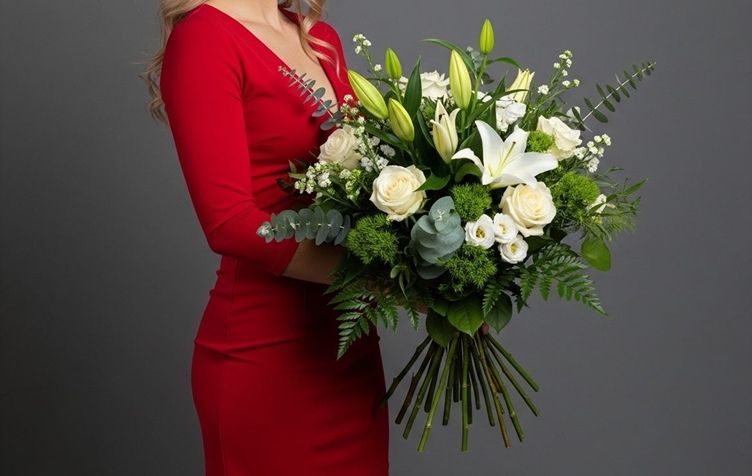
How Long Do Cut Flowers Last?
How Long Do Cut Flowers Last? A Care Guide by Flower Type
How long do cut flowers last? If you’ve ever wondered why one bouquet lasted two glorious weeks while another wilted within days, you’re not imagining it — the answer depends heavily on the type of flower, and a few simple habits can add days to almost any bouquet.
The Short Answer
So, how long do cut flowers last? Most last somewhere between 5 and 14 days in a vase, with the exact number depending on the flower itself, how it was cared for before it reached you, and how it’s looked after once it’s home. Some flowers are naturally short-lived and dramatic; others are built to go the distance. Here’s what to expect from the most popular varieties.
Vase Life by Flower Type
- Roses: typically 7–10 days, sometimes closer to two weeks with excellent care. Their woody stems can block water uptake if not cut properly, so a fresh angled cut makes a real difference.
- Lilies: among the longest-lasting cut flowers, often 8–14 days. Each stem carries several buds that open one after another, which naturally extends the display.
- Tulips: shorter-lived at 5–7 days, and they keep growing after being cut. They also bend toward light, so turning the vase occasionally keeps the arrangement looking balanced.
- Carnations and chrysanthemums: the endurance runners of the flower world, frequently lasting 10–21 days. If you want a bouquet that keeps going, these are hard to beat.
- Hydrangeas: beautiful but thirsty — they can droop within hours if the stem isn’t properly hydrated, though with the right care (see below) they’ll comfortably hold for about a week.
- Peonies: a shorter window of around 5–7 days, but few flowers make as much of an impression while they last — a favourite in our luxury flowers collection for exactly this reason.
- Sunflowers and gerbera daisies: reliable performers, generally lasting 7–14 days with fresh water and a cool spot.
- Orchid stems: can hold for one to two weeks as cut flowers, needing very little water but a clean vase.
Because most bouquets mix several flower types, don’t worry if a few stems fade before the rest — that’s completely normal, and the arrangement as a whole will usually still look full and fresh.
What Actually Determines How Long Flowers Last
Three factors explain almost all of the difference between a bouquet that fades in three days and one that thrives for two weeks:
- Stem structure. Woody stems (roses) and soft, water-heavy stems (hydrangeas, peonies) behave very differently in a vase — soft stems seal over faster and lose water more easily.
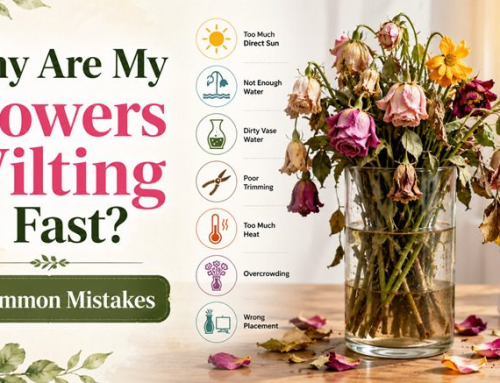
- Water quality. Bacteria build up in vase water within a day or two, blocking the stem’s ability to drink. This is the single biggest cause of premature wilting, and it’s also the easiest to fix.
- Environment. Heat, direct sunlight, and draughts all speed up water loss, while a cool, out-of-the-way spot slows it right down.
Ripening fruit is a lesser-known culprit too — it releases ethylene gas, which speeds up petal drop, so it’s worth keeping bouquets away from the fruit bowl.
Five Habits That Add Real Days to a Bouquet
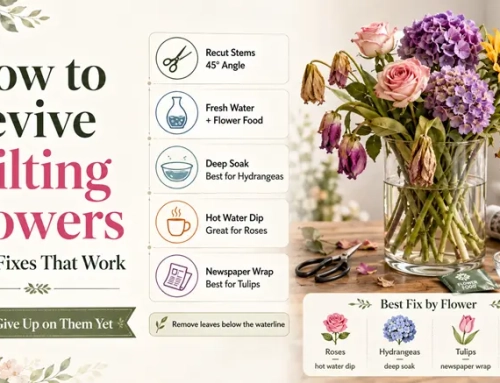
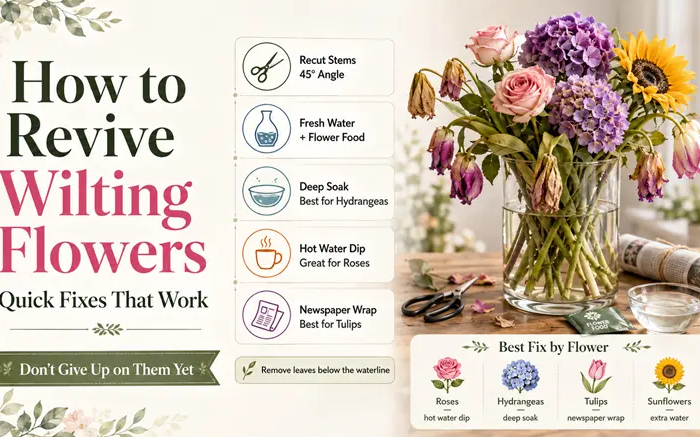
- Trim the stems at a 45-degree angle every 2–3 days, removing about a centimetre. This opens a fresh surface for water uptake.
- Change the water every 1–2 days, and give the vase a proper rinse — not just a top-up — to clear out bacteria.
- Use the flower food provided. It’s not just marketing — studies on cut flower longevity have shown it can meaningfully extend vase life compared with plain water.
- Keep the vase somewhere cool, away from direct sun, radiators, and draughts.
- Remove any foliage that sits below the waterline. Submerged leaves break down quickly and feed the bacteria that clog stems.
For flowers with bulbs, like tulips, cold water throughout their vase life helps keep growth (and bending) under control.
When It’s Time to Say Goodbye
A flower reaching the end of its natural cycle looks different from one that’s simply thirsty. Watch for petals that feel papery or translucent rather than soft, a sour smell from the vase water, or stems that have gone soft and slimy at the base — these are signs the flower is genuinely finished, rather than just in need of a fresh drink and a trim.
If a bouquet has wilted from neglect rather than natural ageing, there’s often still a chance to bring it back — a hard recut of the stems and a long soak can work wonders. We cover the full revival process in our guide on how to care for flowers in a vase.
Choosing Flowers for Longevity
Knowing how long cut flowers last for each type makes it much easier to choose well. If vase life matters for your occasion — say, you’re sending birthday flowers to someone you won’t see for a couple of weeks, or want an anniversary bouquet that lasts through the celebrations — carnations, chrysanthemums, and alstroemeria are the safest long-lasting choices. If a shorter-lived but showstopping bloom like peonies or garden roses is more the mood, that’s a perfectly good trade-off too — just don’t expect them to still be going in three weeks.
Every bouquet from Bloom & Art is cut, conditioned, and dispatched to maximise freshness from the moment it leaves us — but a little care at home is what turns a good bouquet into one that lasts.
Frequently Asked Questions
How long do cut flowers last in a vase?
Most last between 5 and 14 days, depending on the flower type and how well they’re cared for.
Which flowers last the longest?
Carnations, chrysanthemums, and alstroemeria are among the longest-lasting, often holding for 10–21 days.
Does flower food really make a difference?
Yes — it feeds the flower and helps keep the water cleaner, which can meaningfully extend vase life compared with plain water alone.
Why did my flowers wilt faster than expected?
The most common causes are bacteria build-up in dirty water, heat or direct sunlight, or stems that weren’t recut before arranging.
Can wilted flowers be revived?
Often, yes — especially if they’ve wilted from dehydration rather than natural ageing. A fresh angled cut and a long soak in cool water can bring many flowers back.